Starbucks Attendance policy and late rules Guide (2025)
Being late at Starbucks isn’t just a small slip it can affect your record, your schedule, and even your job. The Starbucks late policy is tied directly to the Starbucks attendance policy, which tracks every minute you’re on or off the floor.
Whether you’re running a few minutes behind or clocking in late too often, it’s important to know what Starbucks considers tardy, how it’s handled, and what you can do to avoid getting written up. This guide walks you through all of it, simply and clearly.
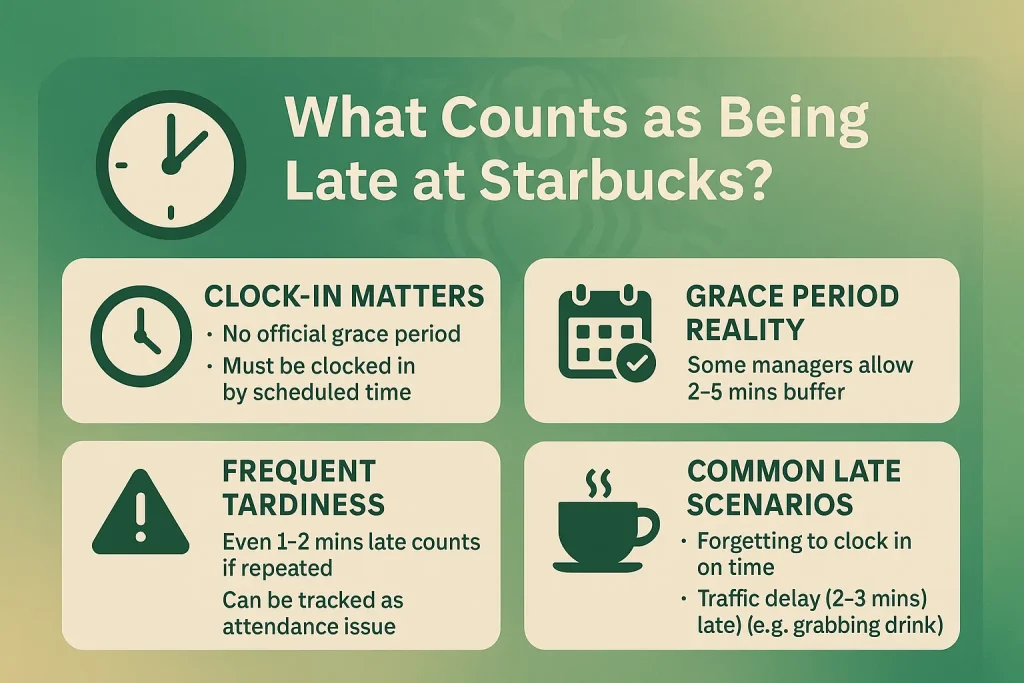
What Counts as Being Late at Starbucks?
At Starbucks, being late doesn’t just mean showing up after your shift starts it also includes clocking in even a few minutes late. The company tracks your time closely, and every punch matters under the Starbucks attendance policy.
Starbucks Clock-In Rules & Grace Period
- There’s no official grace period. Most stores expect you to be clocked in by your scheduled time, not walking in or still getting ready.
- Some managers may allow a 2–5 minute buffer, but this depends on the store—not the policy.
- Clocking in even 1–2 minutes late can still be marked as tardy if it happens often.
Common Late Scenarios
Here are a few real-world examples that can count as being late:
- You arrive on time but forget to clock in until 5 minutes later.
- You clock in 3 minutes late because of traffic.
- You’re in the store on time but still grabbing a drink when your shift starts.
Even small delays like these may be flagged, especially if they repeat. That’s why it’s important to be clocked in, ready, and on the floor by your scheduled start time.
Starbucks Tardiness Policy: How It’s Enforced
Starbucks tracks lateness through your time punches. If you’re consistently late, even by a few minutes, it can lead to warnings and formal discipline under the Starbucks corrective action policy.
Write-Ups, Warnings, and Corrective Action
Here’s how repeated lateness is usually handled:
- First few times → Verbal coaching or reminder
- Continued tardiness → Written warning
- Ongoing issues → Final written warning or possible termination
These steps fall under the Starbucks write up policy, and managers are expected to follow the process. However, how strictly it’s enforced can vary by store.
Repeat Offenses Matter
One or two late clock-ins might not seem like a big deal, but the system adds them up. If you’re late multiple times in a month even just by 3–5 minutes each time it could trigger formal warnings.That’s why it’s important to know how the Starbucks late policy connects directly to your attendance record and your future shifts.
How the Late Policy Ties Into the Attendance System
At Starbucks, lateness isn’t tracked separately—it’s part of the overall Starbucks attendance policy. That means every time you’re late, it adds to your attendance record, just like absences or no-shows.
Absences vs. Tardies
Here’s how they differ:
- Tardy = You show up late but still work your shift
- Absence = You miss all or most of your shift
Multiple tardies may lead to the same disciplinary steps as unexcused absences, especially if they become a pattern. Three or more in a short time might trigger action under the Starbucks corrective action policy.
No Call, No Show vs. Late Arrival
- No call, no show = You miss your shift and didn’t notify anyone. This can lead to a final warning or even termination.
- Late arrival = You showed up, but not on time. Still an issue—but usually handled with coaching first.
If you’re ever unsure, ask your manager how your store tracks these situations. Some stores are more flexible than others, but the company policy stays the same.
Real Partner Experiences with Late Punches
While Starbucks policies are set at the corporate level, how they’re enforced can feel very different depending on your store. Many partners have shared their experiences online—some fair, some frustrating.
Strict Stores vs. Flexible Ones
Some partners say their store leads are strict about every clock-in:
“I got coached for being 3 minutes late twice in one week. I was already in the store, just didn’t clock in fast enough.”
Other stores are more relaxed, especially during short-staffed shifts:
“Our SM only cares if you’re more than 10 minutes late or don’t call ahead. Anything under that, they usually let slide.”
This shows how your store’s culture affects how the Starbucks late policy is applied—even if the rules are technically the same.
What Partners Say Online
Many baristas agree that it’s better to:
- Communicate early if you know you’ll be late
- Clock in on time, even if you’re not 100% ready yet
- Track your own time so you can back yourself up if a warning comes
Whether your store is flexible or by-the-book, understanding how the Starbucks attendance policy works can help you avoid confusion or unfair write-ups.
Punishments for Being Late at Starbucks
Being late now and then might not seem like a big deal, but repeated tardiness can lead to real consequences under the Starbucks attendance policy and corrective action policy.
What You Could Face
- Verbal coaching – This is an informal warning, usually for your first few times being late.
- Written warning – If you’re late repeatedly (even by a few minutes), it’s documented.
- Final written warning – One more issue after this could mean termination.
- Termination – Consistent lateness or no call/no shows can lead to being let go.
These steps follow the Starbucks write up policy, and once you enter the system, each new incident pushes you further along the discipline process.
Important Notes
- There’s no “three strikes” rule—some stores escalate faster.
- A no call, no show is treated far more seriously than a late arrival.
- The punishment often depends on how often you’re late and whether you communicate.
Conclusion
The Starbucks late policy is stricter than many partners expect. Even a few minutes off the clock can add up quickly under the company’s attendance policy. That’s why it’s so important to clock in on time, communicate clearly, and stay aware of how your store handles lateness.
While enforcement may vary by location, the policy is clear: repeat lateness can lead to warnings or even job loss. Staying proactive—by tracking your time, speaking with your manager, and learning the rules—can help you protect your job and avoid unnecessary write-ups.