Starbucks No Call No Show Policy: What You Need to Know
Starbucks, missing a shift without telling anyone is taken seriously. A no call no show (NCNS) doesn’t just hurt the store it can lead directly to write-ups or even job loss. This policy is part of Starbucks’ broader attendance and corrective action system, and every partner is expected to know the rules.
In this guide, we’ll explain exactly what counts as a no call no show, what happens if it occurs, and how to avoid getting written up or fired. Whether you’re new or have been around a while, knowing the Starbucks no show policy could save your job.
What Counts as a No Call No Show at Starbucks?
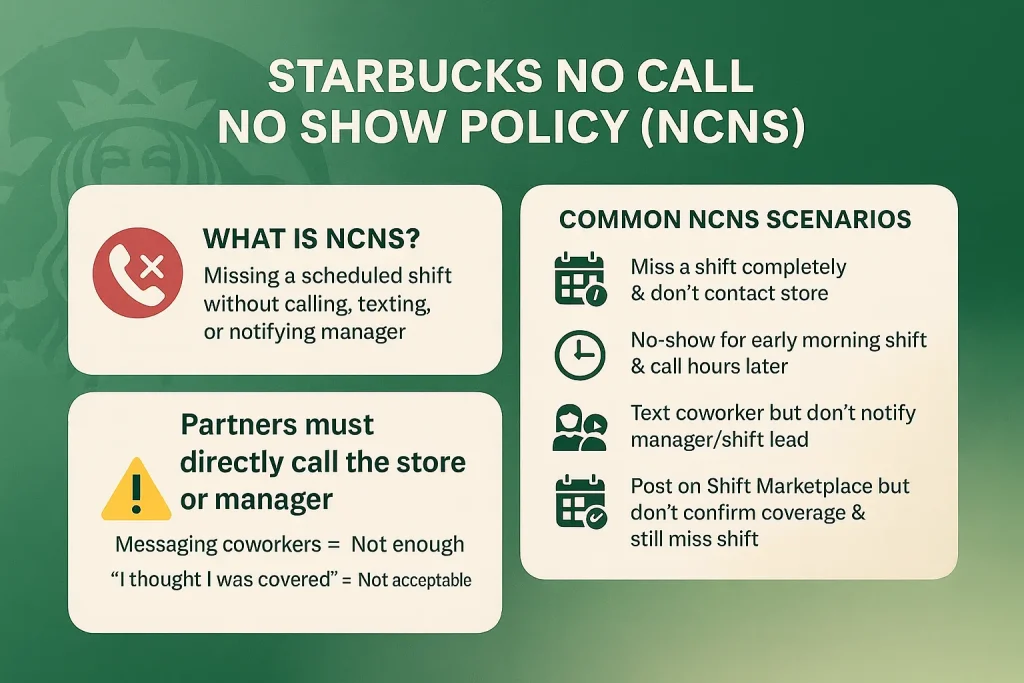
Under the Starbucks no call no show policy, a no call no show (NCNS) happens when a partner misses a scheduled shift without calling, texting, or notifying anyone in advance. Even if it’s unintentional, Starbucks considers it a serious attendance violation.
Common NCNS Scenarios
- You miss a shift completely and don’t contact the store
- You’re a no-show for an early morning shift and call hours later
- You text a coworker but don’t officially notify the shift lead or manager
- You rely on Shift Marketplace to find coverage but don’t confirm anything and still miss the shift
According to Starbucks NCNS rules, talking to your manager directly (or calling the store) is required. Messaging someone else, or saying “I thought I was covered,” isn’t enough.
What Doesn’t Count as NCNS
- You call out properly and speak to your store lead or manager
- You log sick time and notify early, even if it’s close to shift time
- You communicate late, but before your shift ends some stores may still count that as late or unexcused, but not NCNS
The bottom line: If you don’t contact the store before your shift starts, it likely counts as a no call no show under the Starbucks attendance policy.
NCNS and the Corrective Action Policy
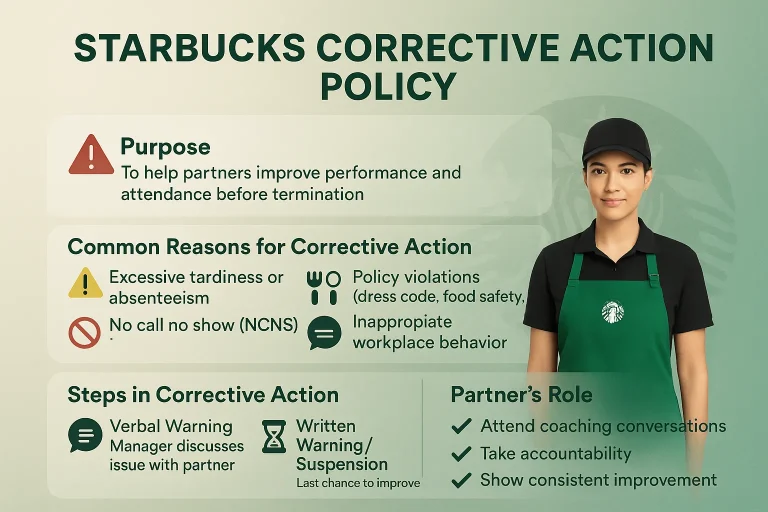
The Starbucks corrective action policy is a step-by-step system that helps managers handle rule violations fairly. But when it comes to a no call no show (NCNS), the process can move fast—especially if you’ve had past issues.
Warnings, Write-Ups, and Final Steps
Normally, Starbucks uses progressive discipline:
- Verbal coaching
- Written warning
- Final written warning
- Termination
But with NCNS, a manager can skip steps if they believe the violation is serious enough.
Example: If you’ve already been late or called out multiple times, one NCNS may count as your final step in the system—even if you weren’t officially on a final warning before.
When Termination Is Immediate
In some cases, a single NCNS may be treated as job abandonment, especially if:
- You’ve had previous attendance violations
- You don’t respond to follow-up contact after the missed shift
- You’ve already been coached or warned about attendance issues
Once it’s logged as job abandonment, you may be removed from the schedule without further discussion, and rehire eligibility may be affected.
What to Do If You Miss a Shift Without Calling
Mistakes happen—but a no call no show doesn’t have to end your job. If you miss a shift and fail to notify your store, act fast.
What to Do:
- Call your store immediately, even if the shift has already ended
- Apologize directly to your manager and explain honestly (don’t make excuses)
- If it was an emergency, provide proof (hospital visit, phone log, etc.)
- Ask if the missed shift will be marked as an attendance violation or if anything can be done to reduce the impact
- While the Starbucks no call no show policy is strict, showing accountability right away can help soften the outcome—especially if it’s your first time.
Real Partner Experiences with NCNS Write-Ups
“I missed an opening shift by accident. I called three hours late. My manager still gave me a final warning.”
– Partner, Chicago
“I was having a panic attack and couldn’t call in. They wrote it up as NCNS, but I was able to explain it later with HR.”
– Partner, Los Angeles
Some Starbucks stores follow the Starbucks write-up policy exactly—others are more flexible if they know your situation. But the rule is clear: if you don’t communicate, the missed shift can be treated as job abandonment.
Tips to Avoid No Call No Show Issues
- Save your store number in your phone and keep it easy to access
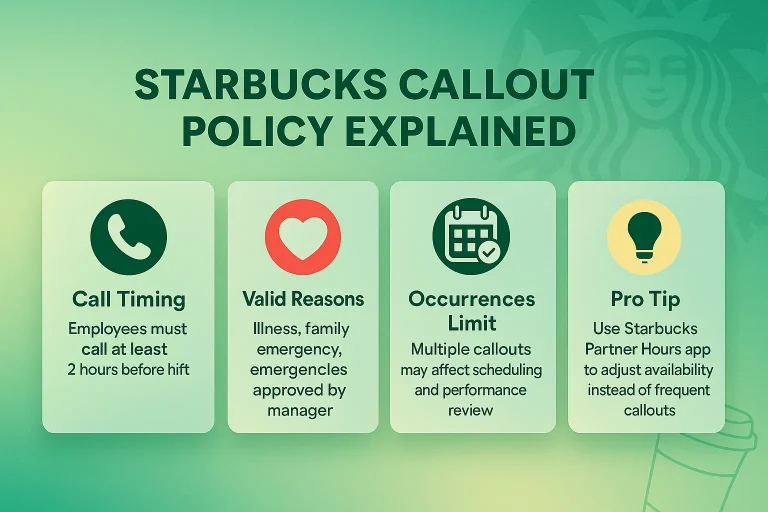
- Always call—even if you’re late or the shift already started
- If you’re sick, use Starbucks sick time policy and log your hours properly
Communicate early if you think there might be a conflict—don’t wait until it’s too late
FAQs About Starbucks No Call No Show Policy
Conclusion
The Starbucks no call no show policy exists to protect store operations—but it can quickly lead to serious consequences for partners who slip up. One missed shift without communication can damage your record or end your job altogether.
Stay ahead by saving contacts, calling early, logging your sick time, and understanding how the Starbucks attendance policy works. A little effort goes a long way toward job security.